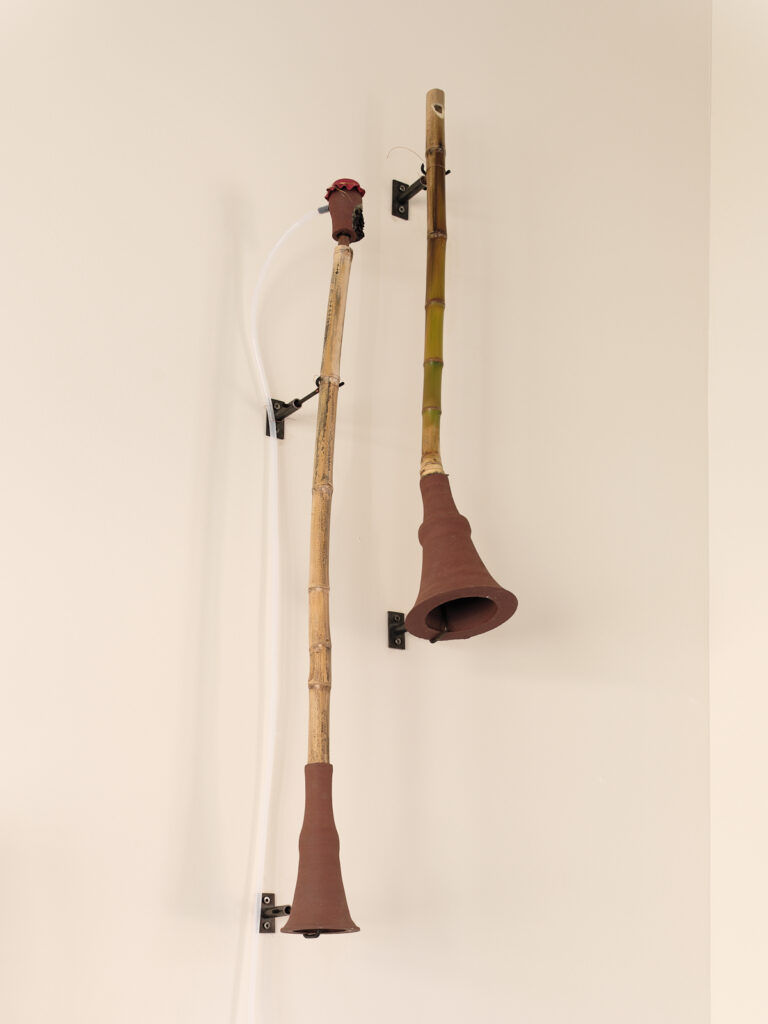
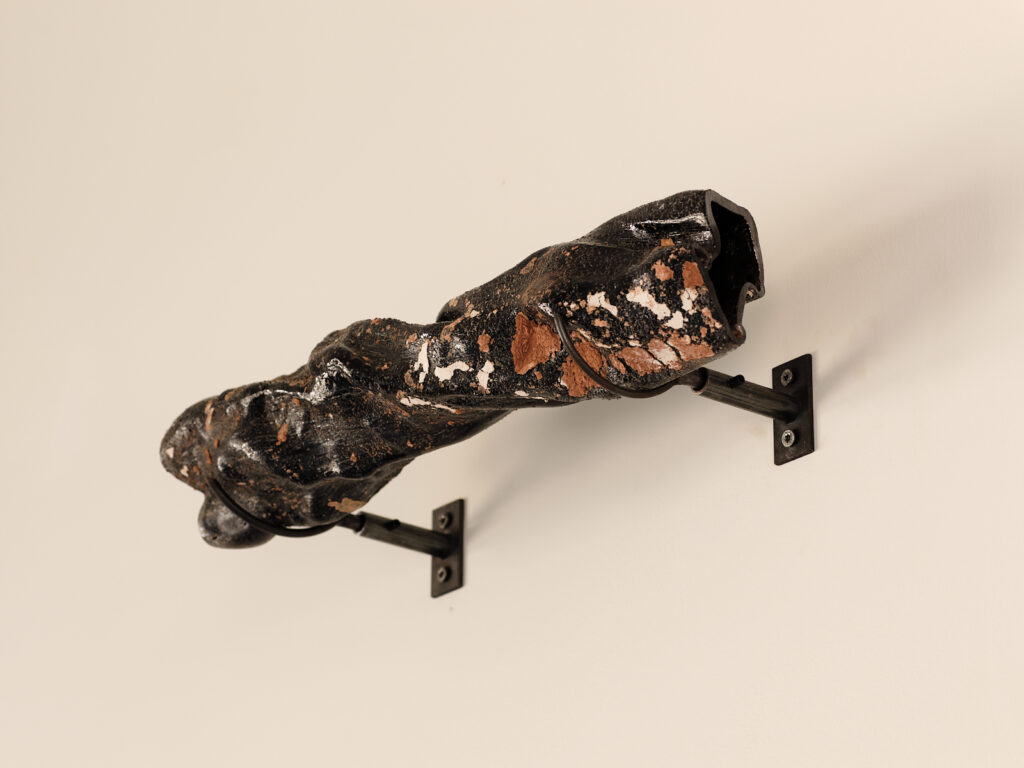
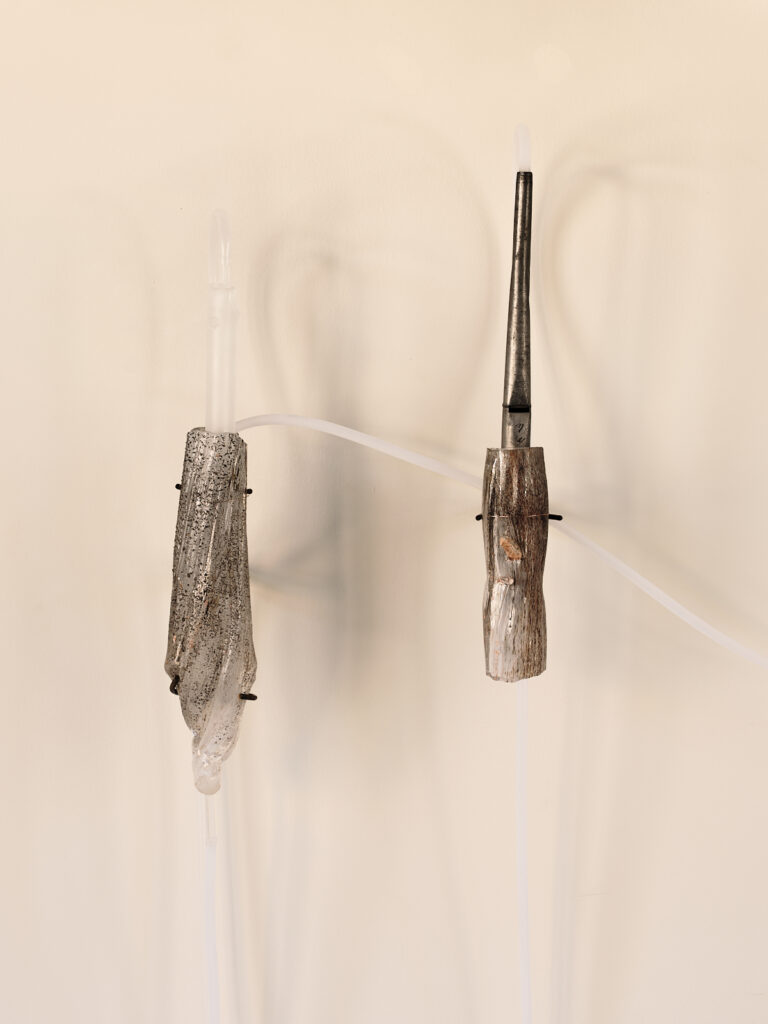
Une généalogie des souffles, 2026
Les Petites Écuries, Nantes
Production : Les Factotum as part of a residency at Les Petites Écuries – Arts du feu et du faire (Nantes)
Photos : Philippe Piron
The work of visual artist Alan Affichard, presented in this exhibition, emerged from a research and experimentation residency and stems from a dialogue with the Arcam Glass and Ceramics workshops led by Simon Fédou and Marie Hulbert.
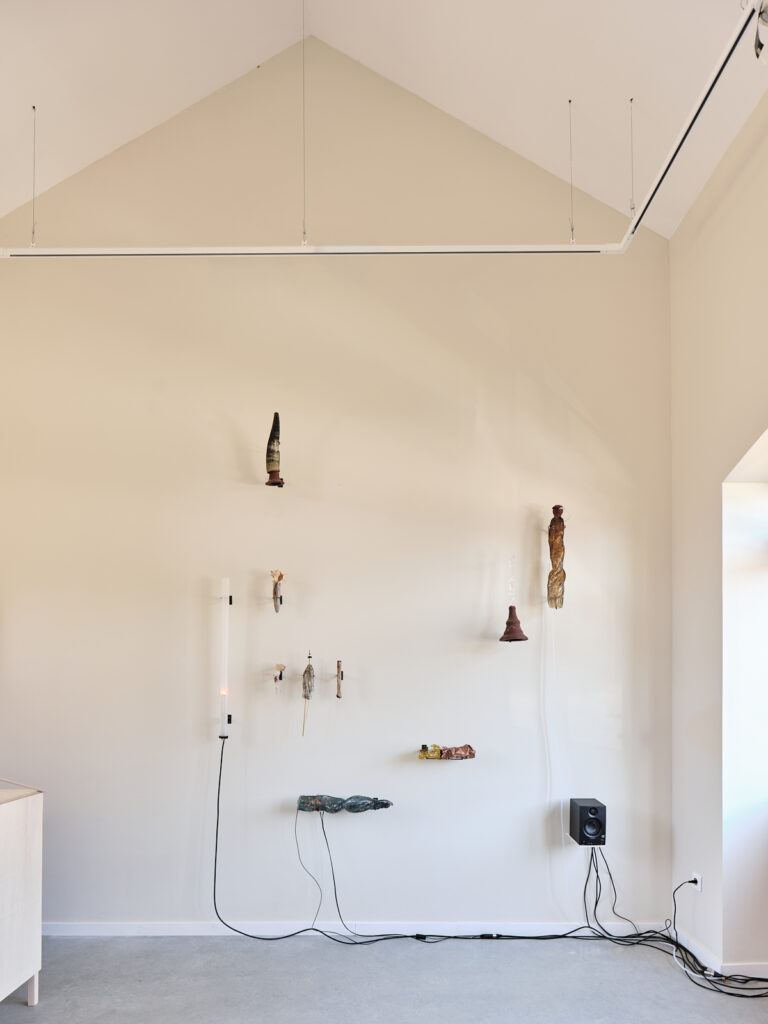
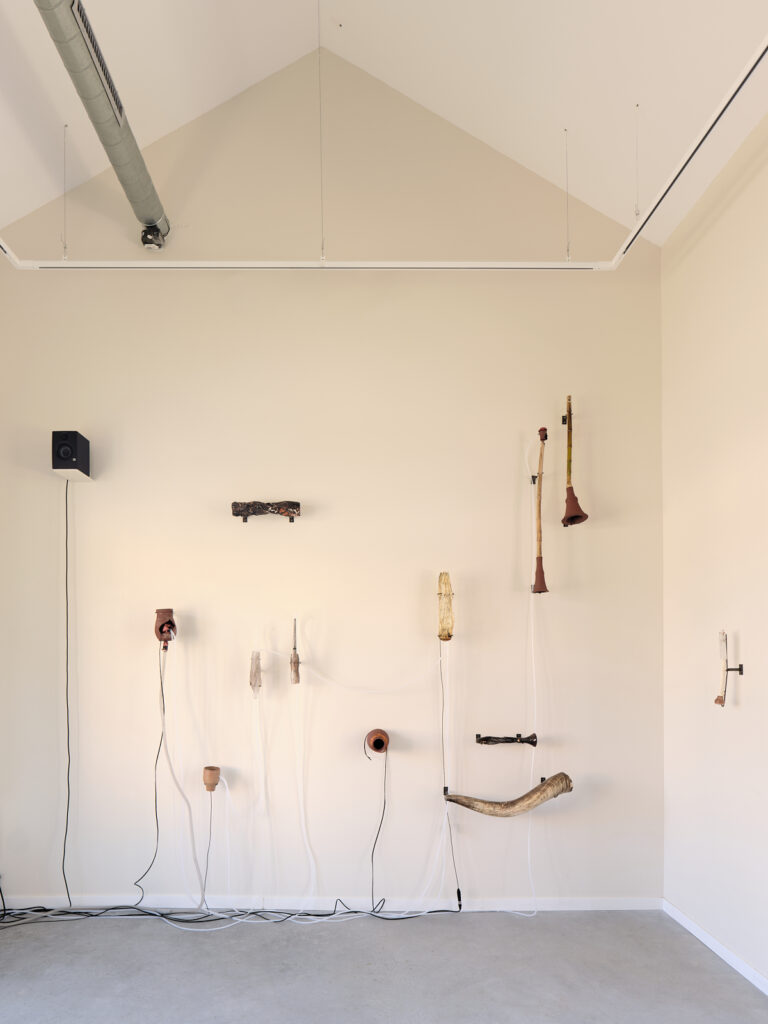
A genealogy of breaths draws its origins from a visual archive centered on the flute, one of the world’s oldest instruments, with the earliest known examples dating back to the Paleolithic era. With a sensitive eye, and without any claim to historical accuracy, artist Alan Affichard captures the variety of forms this object has taken across eras and regions. Taking a speculative approach, the artist borrows some of these ancient forms and imagines others, creating gaps in what flutes and wind instruments might have been—or could become.
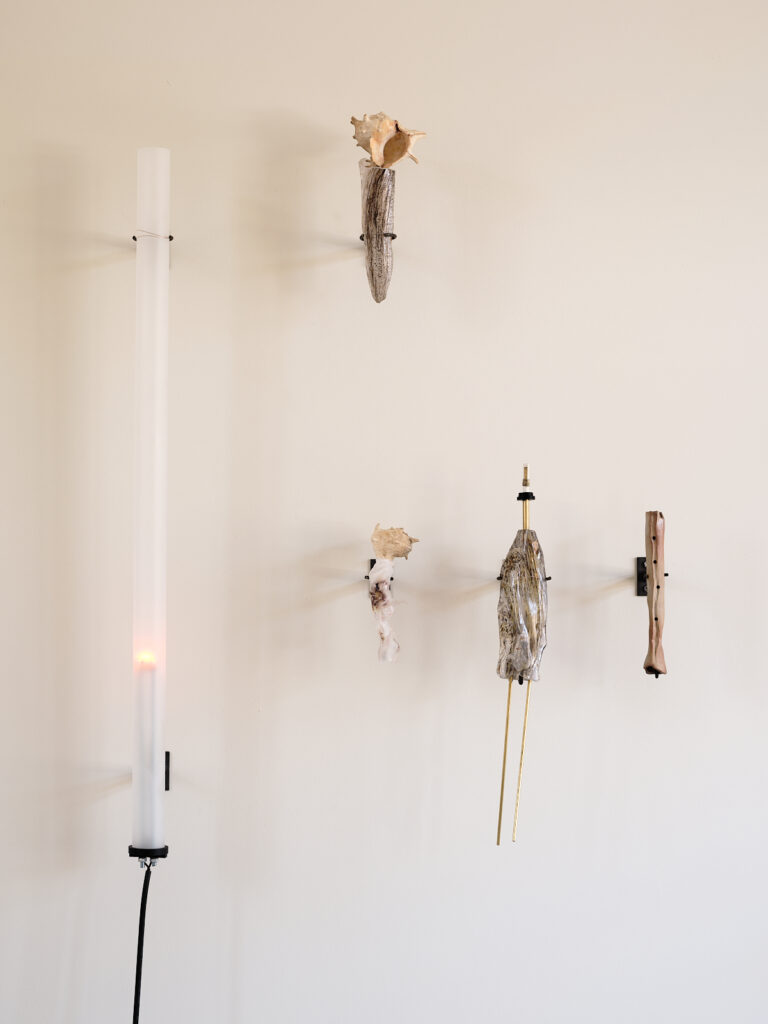
Alongside this archaeological exploration, the installation reflects the artist’s interest in certain fields of physics—thermoacoustics¹ and fluid mechanics²—which study the transformation of energy into vibrations. These principles activate the piece’s sonic potential. Designed as an autonomous system, the installation explores the possibilities of generating sound without human intervention.
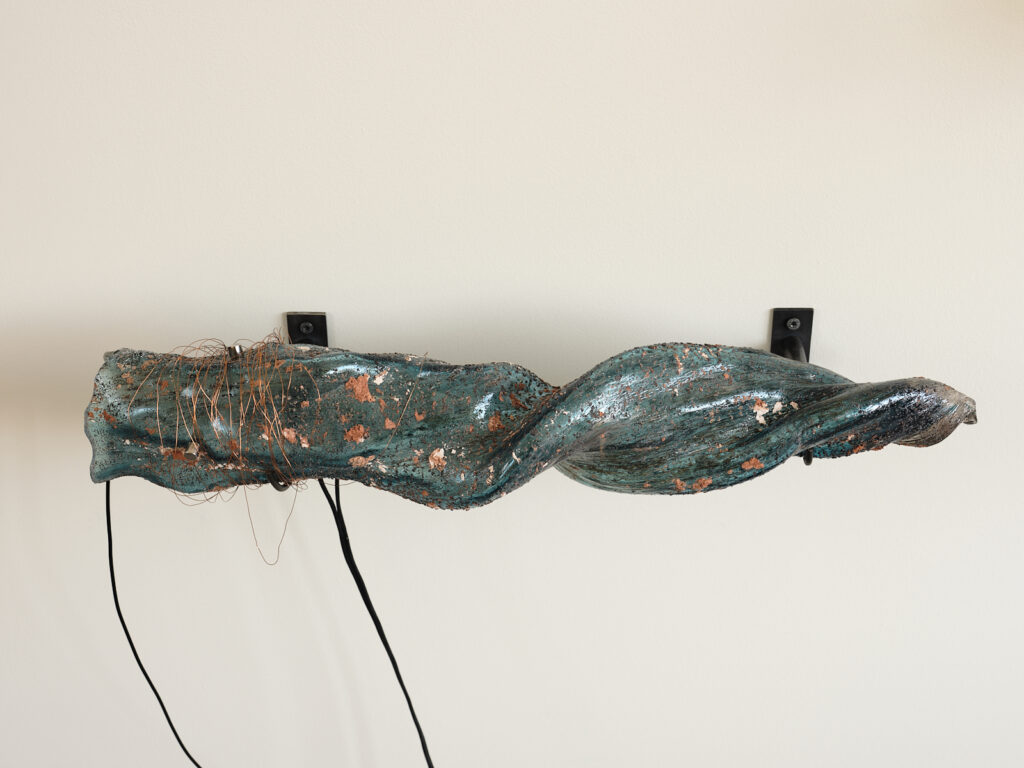
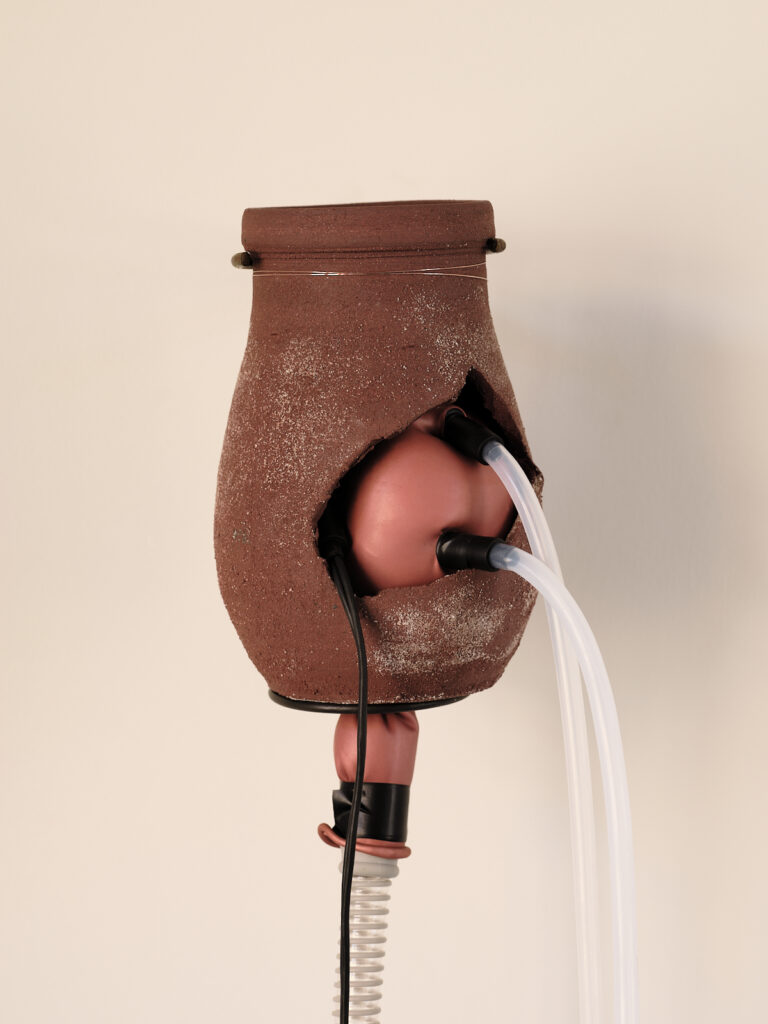
In the space, two containers act like communicating vessels: the water level modulates the note played. This aquatic breath intersects with a pneumatic mechanism that activates the mouthpieces of certain instruments according to a score. Other pieces, meanwhile, simulate the electroacoustic functioning of speakers through a magnet and a wound copper coil. They resonate with one another through the use of feedback. Opposite, within a cylindrical body, heat causes it to vibrate at its own frequency.
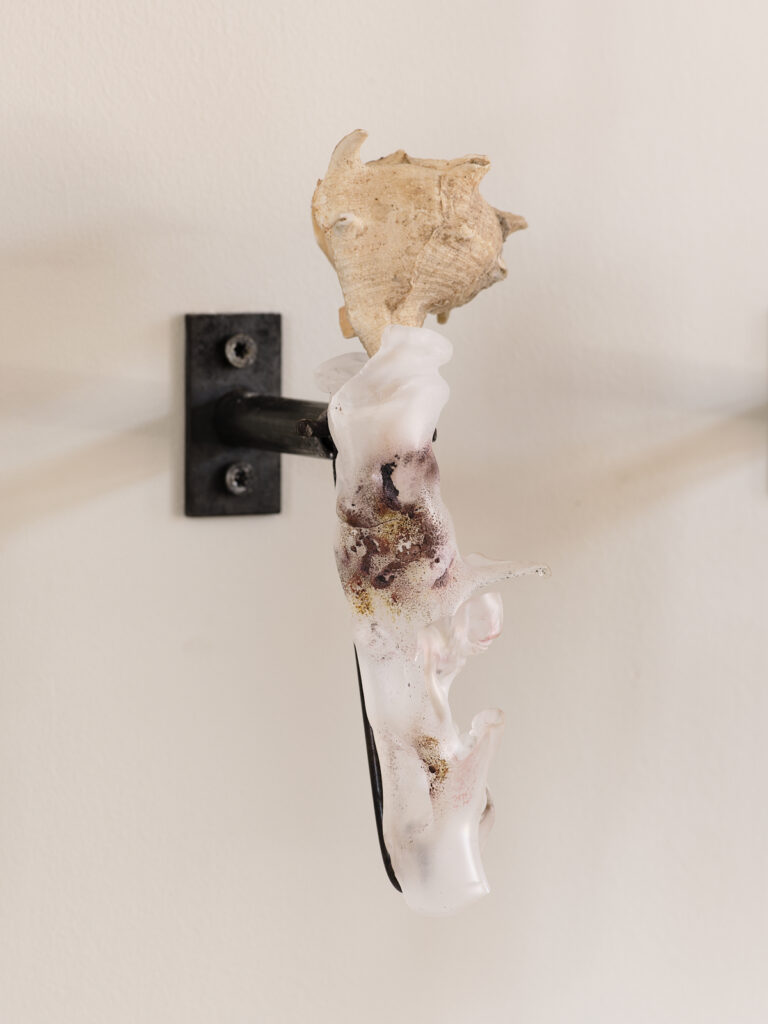
This story of breath echoes the technique of glassblowing: the thermoacoustic phenomenon arose from an observation by glassblowers who perceived sounds emerging from their rods. Alan Affichard thus shapes fragments of glass into tubular forms—inflated, swollen, or even altered by oxides. Air rushes into these volumes, collides with their rough surfaces, and generates a variety of notes. These experiments draw on various glassworking techniques: blowing to stretch and twist the material; working with a torch to create fine, precise mouthpieces from tubes; and crafting a mold to blow the glass into a constrained, puffed-up shape.
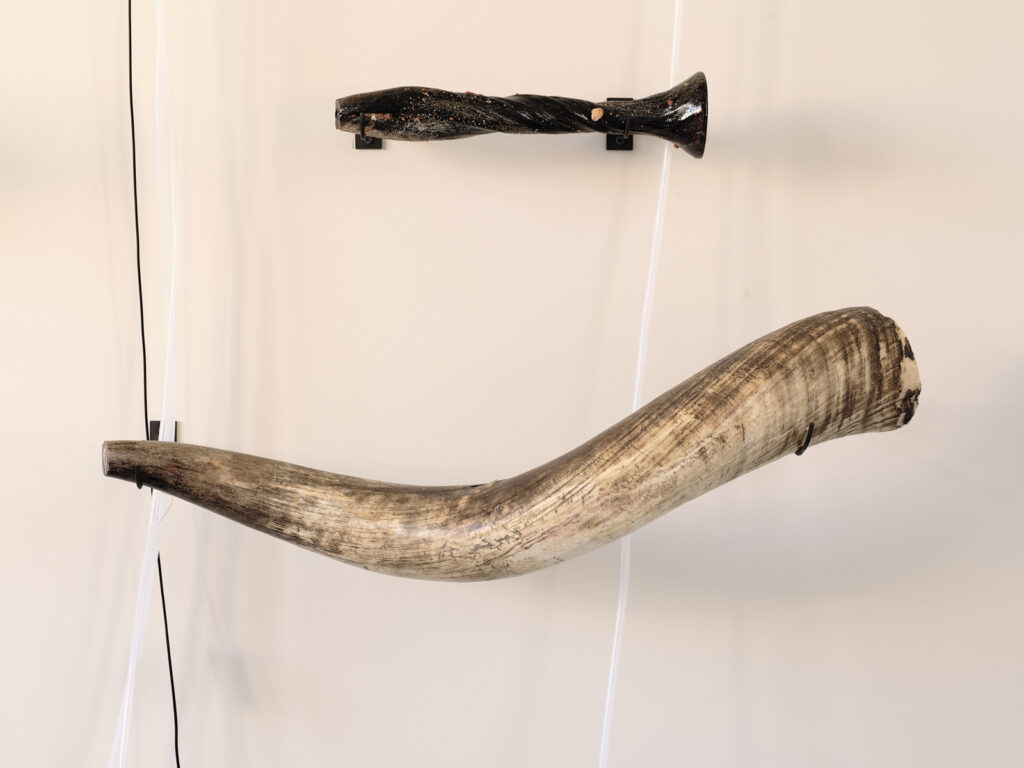
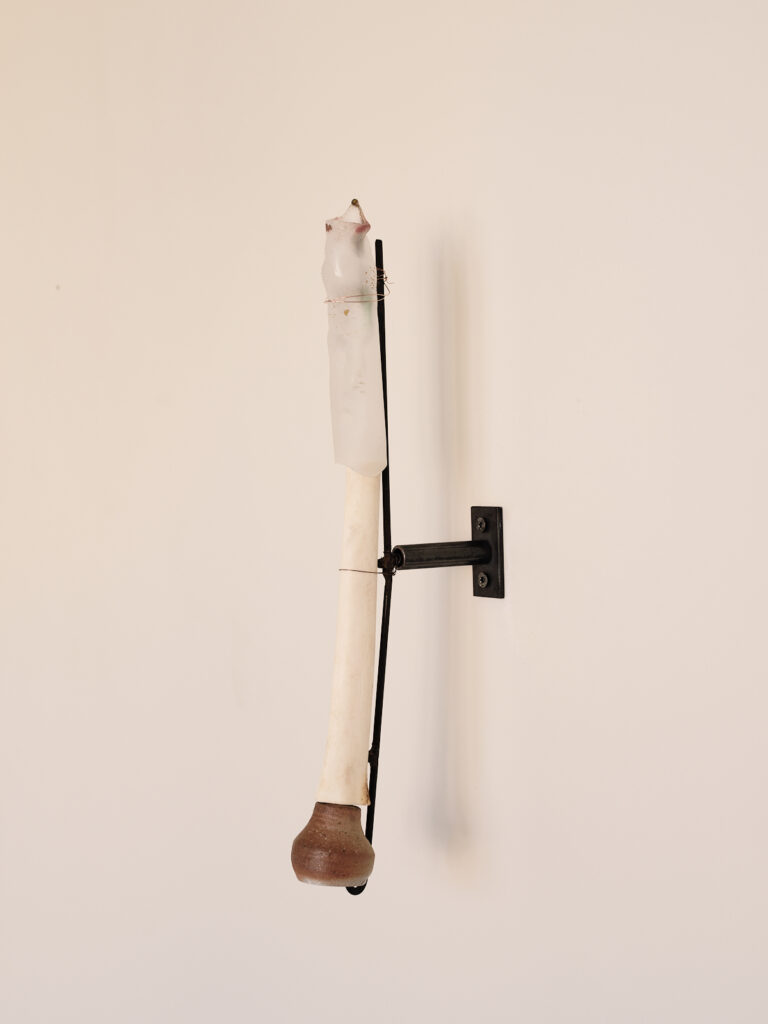
Through a process of assembly and hybridization, Alan Affichard creates new instruments from fragments of glass and ceramic, combined with found materials such as bones, horns, and bamboo. He conceives a collection of objects—sometimes incomplete—with unique sonic qualities.
The exhibition’s layout presents this formal exploration in the style of an archaeological museum, while bringing its acoustic dimension to life. Connected by a network of tubes and cables, these wind instruments engage in a polyphonic dialogue composed by the artist. Meanwhile, other pieces remain silent, retaining only the suggestion of their sonic potential.
curator and text: Pauline Thoër
Technical support during residency: Simon Muller, Simon Fédou, Marie Hulbert
Glass production: Arcam Glass
Ceramics production: Simon Fédou and Marie Hulbert
Metal production: La Mutine
3D printing: Point Zéro (Le Plongeoir)
Wood production: Pierre Lucion (Ici Nantes)
Technical consulting: Valentin Antoin, Nicolas Rambaud, Lisa Rodrigues
With the support of l’École des Beaux-Arts Nantes Saint-Nazaire